The many selves of
Marrubium
Genius = 0.76 | GOS = 0.67 | COS = 0.79
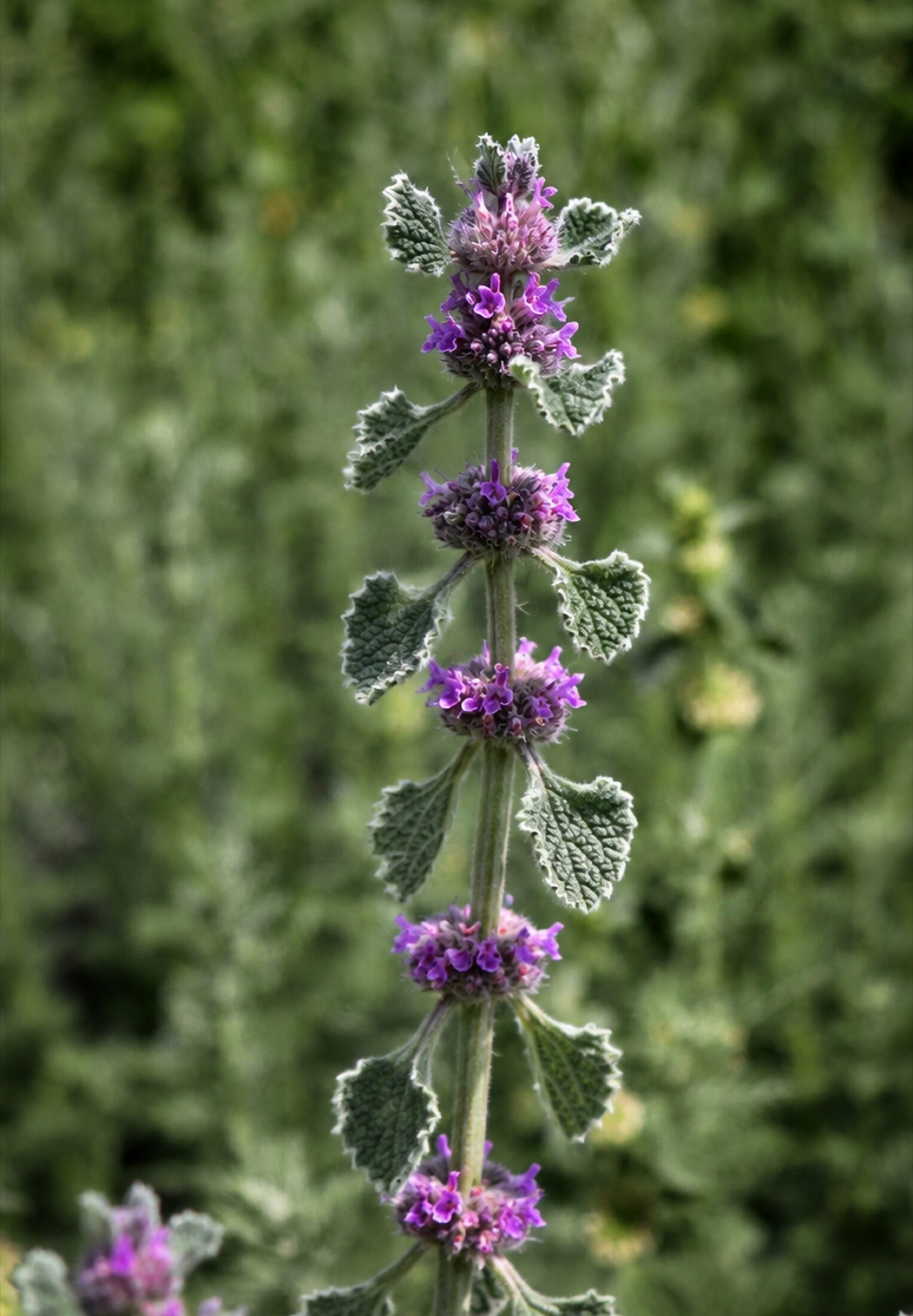
Marrubium, within the Lamiaceae, comprises approximately 40 species distributed across dry Mediterranean and temperate landscapes, where he occupies rocky slopes, disturbed soils, and exposed field margins. He presents a rugged, defensive presence: woolly silvered leaves, square stems, and compact pale flowers adapted to drought and heat. His organizing principle lies in functional austerity: a genus that transforms environmental hardship into concentrated medicinal resilience.
Genomically, the genus shows moderate complexity, with limited hybridization but strong ecological adaptation across species. Biosynthetic pathways remain highly conserved, enabling stable production of defensive and medicinal compounds under environmental stress.
Chemically, Marrubium expresses a highly focused and durable metabolite profile, dominated by marrubiin alongside flavonoids such as apigenin and luteolin, phenolic acids, tannins, and polysaccharides. These compounds support expectorant, hepatoprotective, antimicrobial, digestive, and anti-inflammatory functions, with concentrations shifting in response to drought, sunlight, and soil composition.
Across these many selves, austerity remains central, a genus that does not expand or diffuse its identity, but sustains it through concentrated defense, persistence, and physiological fortitude across demanding environments.