γ1
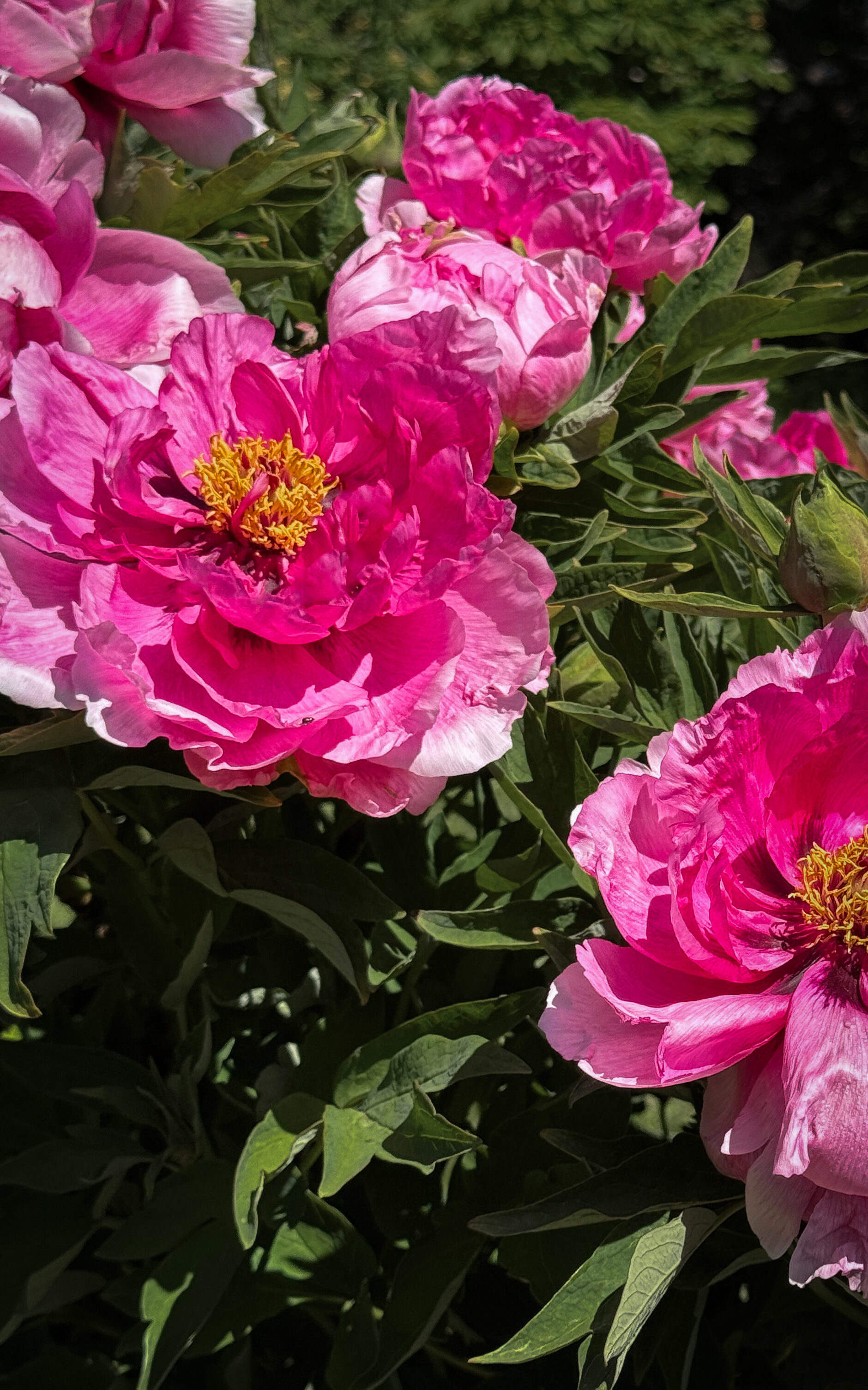
Paeonia suffruticosa
Paeonia suffruticosa, the tree peony, has been revered in China for over two millennia. Known as mǔdān, she embodies nobility, prosperity, and feminine grace, appearing in poetry, painting, and imperial gardens. A woody shrub derived from ancient hybrids in the subsection Vaginatae, she differs from herbaceous peonies by keeping her framework through winter, then erupting in spring with divided foliage and immense, silktextured flowers, often 20–30 cm across, brushed in whites, pinks, crimsons, and dramatic blotches. Cultivated since the Han Dynasty for both ornament and medicinal root bark, she rose to symbolic prominence in the Tang and Song eras, inspiring countless cultivars and artistic tributes. Introduced later to Japan and the West, she adapted into new forms and meanings. Today she remains a centerpiece of temperate gardens, a slowgrowing shrub that rewards patience with decades of luminous bloom and centuries of cultural memory.